
Are You Actually Doing the BPE?
Aug 15, 2026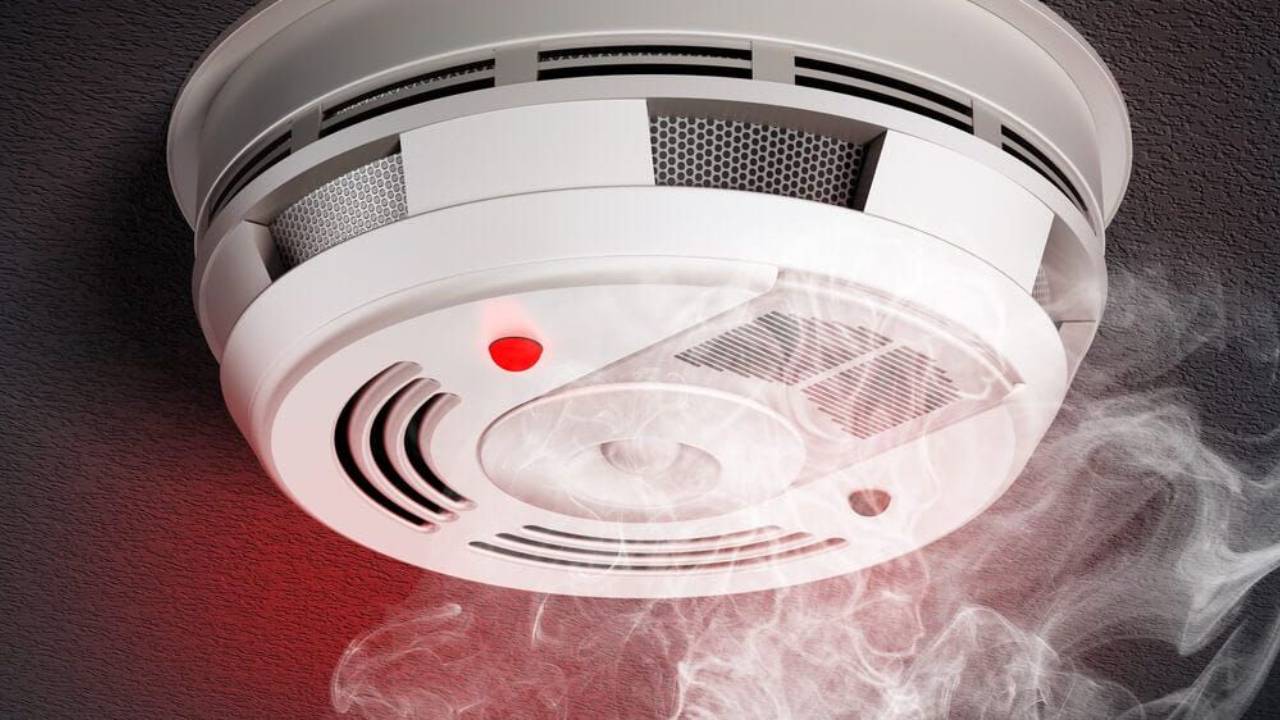
Author: Gum Specialist Dr Reena
I’ll let you into a secret. I’ve heard clinicians joke about “visual probing.” A quick glance at the gingiva, a mental note that it looks fine, and the BPE box gets filled in accordingly. No probe. No force. No actual measurement. Just a look.
We laugh about it. But here’s the thing - periodontal disease is one of the most visually deceptive conditions in dentistry. The patient with a mouth full of deep pockets and significant bone loss can look, to the naked eye, completely unremarkable. No obvious swelling. No dramatic recession. Gingiva that appears healthy right up until the moment you put a probe in and it disappears to 7mm. Periodontal disease doesn’t read the room. It doesn’t arrange itself visibly for your inspection. You have to go looking for it. And the tool we have for that - the Basic Periodontal Examination - has been mandatory BSP guidance since 1986. That’s nearly four decades. And we’re still not using it properly!
A Smoke Detector. Not a Fire Report.
Here is the single most important thing to understand about BPE, and the thing most commonly misunderstood: it is a screening tool. Full stop. It tells you whether something is wrong and where to look next. It does not tell you what is wrong, how severe it is, how long it’s been there, or what to do about it beyond the immediate next step. Think of it as the smoke detector in your building - it goes off when there’s a problem. It does not locate the fire, assess the structural damage, or draw up the restoration plan. That is a different job, requiring different tools.
The BPE represents a minimum standard of care for initial periodontal assessment. And yet, in practice, a code 3 gets recorded, a note is made, and the appointment moves on. The smoke detector fired. Nobody went to check. The patient returns in six months. The code 3 is still there. Still no full chart. Still no radiographs. Still no fire investigation. Meanwhile, the building is quietly burning.
The action required by each code is not guidance. It is the protocol. Code 3 requires initial therapy including self-care advice, then post-initial therapy, a 6-point pocket chart in that sextant - if it remains a code 3. Code 4 requires a full 6-point pocket chart throughout the entire dentition. A code 3 is not “let’s see how it goes.” It is a clinical instruction to look further. A code 4 is not “needs a good clean.” It is a comprehensive periodontal assessment and a treatment decision. The number in the box is the beginning of the clinical workflow. Not the end of it.
The Asterisk Nobody Records
If the smoke detector is the BPE, the asterisk is the carbon monoxide alarm - the one nobody realises they also need. Furcation involvement, recorded as an asterisk alongside the BPE score, is among the most underrecorded findings in general practice. It changes the clinical picture entirely: it affects prognosis, treatment planning, the decision between non-surgical and surgical management, and whether the tooth is ultimately maintainable. A code 3* and a code 3 are not the same thing. They look identical in the box without the asterisk. They are clinically worlds apart. Record it. Every time.
When Two Clinicians Get Two Very Different Answers
Same patient. Same mouth. January: codes 1, 2, 2, 1, 2, 1. June: codes 3, 3, 2, 2, 3, 2. Different clinician. Wildly different picture. Who is right?
BPE variability between clinicians is well-documented - driven by probe angulation, probing force, speed, and whether all sites in a sextant are genuinely examined or just a representative few. The probe is not a passive instrument. The way you hold it, angle it and apply it changes what you find. A systematic review found significant variation in recorded pocket depths based on force alone. Twenty-five grams feels different to different hands.
This matters far beyond clinical curiosity. Inconsistent BPE recordings across clinicians and appointments are one of the most common sources of medicolegal difficulty in periodontology. The patient who loses teeth under regular dental care, with a notes trail of fluctuating scores and no documented action, presents a record that is very difficult to defend. The notes tell the story. Make sure it’s the right one.
The fix is not complicated. Raise it at a practice meeting. Agree a consistent technique. Calibrate against each other - probe the same patient, compare scores, discuss the differences. Consider an audit of BPE recording across the team. It takes one afternoon and it closes a significant clinical and legal gap. Singing from the same hymn book isn’t bureaucracy. It’s protection - for your patients and for you.
The Limitations BPE Was Never Designed to Hide
BPE is a brilliant tool for what it was designed to do. It is a poor tool for anything beyond that - and the problems arise when clinicians use it as something it was never meant to be.
It records the worst score per sextant. One pocket of 5.5mm in an otherwise perfectly healthy sextant gets a code 3. Generalised moderate pocketing throughout that same sextant also gets a code 3. The severity, distribution and pattern of disease - the clinical nuance that shapes treatment planning - is invisible to BPE. It was designed for speed and simplicity. That efficiency comes at the cost of detail.
Equally, BPE cannot be used to monitor the response to periodontal therapy - it provides no information about how individual sites within a sextant change after treatment. To assess treatment response, a full 6-point pocket chart should be recorded pre and post-treatment. The clinician using BPE to track outcomes is using the wrong instrument entirely. It’s the equivalent of checking whether your soufflé has risen by looking at the kitchen door. You need to open the oven.
And the under-18s: different rules, different codes, commonly misapplied. Children should be screened from age 7, assessing first molars and central incisors. Adult BPE codes applied to a mixed dentition produce false pocketing around partially erupted teeth and miss the genuine findings that matter. The guidelines exist. Read them.
What Good BPE Practice Actually Looks Like
Use a WHO BPE probe - the ball end and black band are not decorative. Apply 20-25 grams of probing force - light enough not to cause discomfort, firm enough to reach the base of the pocket. Walk the probe around all teeth in the sextant. Record the highest score. Record the asterisk where there is furcation involvement. Do this at every new patient examination and every periodic recall. Then - and this is the part that matters - act on what you find.
The BPE is the minimum standard of care and should be documented in every set of notes. Not most notes. Not when you remember. Every set. A missing BPE is not a neutral finding - it is a gap that tells a story you don’t want told in front of a GDC panel.
Discuss it with the patient too. They deserve to know their scores and what they mean. A patient who understands that a code 3 requires further investigation is a patient who understands they have a problem worth taking seriously. That conversation - clear, specific, documented - is both good clinical practice and the single most effective medicolegal protection available to you.
The smoke detector has been installed in every practice in the country for nearly forty years. The question is not whether it’s there. It’s whether anyone is listening when it goes off - and whether, when it does, anyone actually goes to find the fire!
