
Dyson Made a Toothbrush – Here's What a Periodontist Actually Thinks!
Sep 02, 2026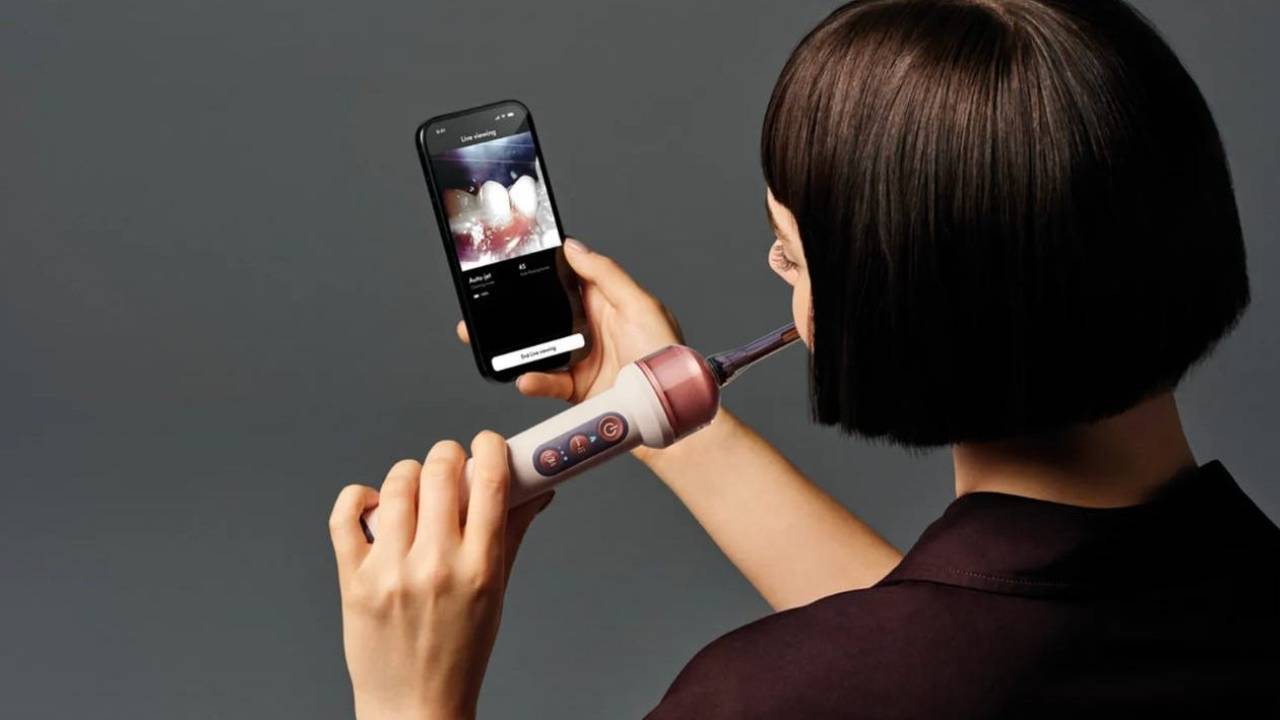
Author: Gum Specialist Dr Reena
Dyson has made a toothbrush. Of course they have. The company that looked at the vacuum cleaner - a product the world had accepted as perfectly adequate for a century - and decided the whole thing needed rebuilding from first principles, has now turned that same forensic gaze on the humble electric toothbrush. The result is the CameraJet. It brushes, flosses, irrigates, and films the inside of your mouth in real time using a 100,000-pixel macro camera that analyses 28 images per second, with AI that triggers a precision liquid jet within 100 milliseconds of detecting a gap between teeth. It costs £419.99. It launched this week. And the dental profession has opinions.
Let’s start with what Dyson got right - because they got quite a lot right. Six years of research and development. A sonic motor oscillating 245 times a second, with dedicated bristle zones for gumline cleaning and stain removal. RFID technology in the brush heads to track use and prompt replacement. WiFi, Bluetooth, a smart app that gives you live intraoral footage and brushing feedback in real time. A dock that charges the device and automatically refills its 12.5ml mouthrinse reservoir in about three seconds. And - this part is worth noting - images captured for targeting are processed on the device and not cloud-stored. The engineering ambition here is genuine and the attention to detail is unmistakably Dyson.
The innovation that most interests me clinically is the machine-learning “Gap Optical Targeting” system. The camera identifies spaces between teeth and directs a precision jet of mouthrinse into them, automatically, while you brush. This is a genuinely novel approach to the problem that every dentist and hygienist has been wrestling with for decades = patients don’t clean interdentally. Not because they lack motivation, necessarily, but because it requires a separate tool, a separate step, and a degree of manual dexterity that many find difficult. Dyson has attempted to build the interdental element into the brushing action itself. That instinct is clinically correct. The execution is clever. The question is whether the outcome is equivalent.
And here is where I have to be honest. The liquid jet is better understood as a water-flossing-style adjunct than as a replacement for mechanical interdental cleaning. Think of it this way: the jet is the power shower - high pressure, satisfying, excellent at flushing debris from accessible surfaces. The interdental brush is the scrubbing brush - it physically disrupts the biofilm that adheres to the tooth surface and cannot simply be rinsed away. For patients with open embrasures or a history of periodontitis, an appropriately sized interdental brush remains my first clinical choice where it fits safely. For tight contacts, floss may still have a role. The CameraJet does not replace either of those things. It can supplement them - and for patients who currently do nothing interdentally, that supplementation may represent a meaningful clinical improvement. But supplement is the operative word.
Dyson’s own claim - that laboratory testing found nearly 70% more plaque removal in hard-to-reach areas than premium electric toothbrushes under certain test conditions - deserves the same scrutiny any clinical claim deserves. The testing used proxy plaque developed in research with the National University of Singapore, not a randomised controlled trial in patients with real periodontal disease, recession, implants, or larger interdental spaces. “Under certain test conditions” is doing significant work in that sentence. The device is brand new. Independent, peer-reviewed clinical evidence does not yet exist. Long-term improvements in plaque scores and bleeding scores remains to be demonstrated. As clinicians we should be genuinely interested - not dismissive, but not uncritical either.
The camera, though, I find genuinely fascinating as a behaviour change tool. Real-time visualisation of the inside of your own mouth while brushing - seeing exactly which surfaces you’re missing, in high definition, every morning = addresses something that clinical instruction alone rarely achieves. Telling a patient they’re not cleaning the backs of their lower molars is one thing. Showing them, in real time, on their own phone, is another. If this device makes patients more aware, more engaged, and more motivated to clean the areas they habitually miss, it will have achieved something that years of leaflets and instruction have not. Behavioural change needs a mirror, not just a lecture. The CameraJet is a very expensive, very clever mirror.
The practical caveats are real. The docking station is large and may not suit every bathroom. The flossing mode can get messy. Dyson has also launched its own non-foaming toothpaste and low-foaming mouthrinse - necessary because foam would interfere with the camera’s view - which adds to the ongoing cost. At £419.99 with refills to consider, this is unambiguously a premium product, and version one of any Dyson device tends to have edges that later iterations smooth out. The hair dryer needed iterations. The vacuum needed iterations. The CameraJet will too.
Here is my clinical bottom line:
What’s promising - live visualisation may genuinely improve cleaning awareness and coverage. Greater emphasis on the interdental areas is always welcome. Real-time technique feedback may support behaviour change in ways that chairside instruction cannot.
What we still need - independent peer-reviewed clinical evidence. Long-term plaque and bleeding scores. Data specifically in patients with periodontitis, recession, implants and larger interdental spaces. Until that evidence exists, the headline plaque-removal claims should be interpreted with appropriate caution.
The clinical reality - the precision jet is a water-flossing-style adjunct. It does not mechanically engage interdental surfaces in the same way as an appropriately sized interdental brush. For periodontally susceptible patients, that distinction matters enormously.
No toothbrush - however intelligent, however expensive, however beautifully engineered = can replace personalised clinical advice, effective technique, and daily consistency. The probe still doesn’t lie. The pockets still need measuring. And the interdental brush, unglamorous and un-Instagrammable as it is, still needs to go in the gaps.
What Dyson has done is make oral care interesting. They have entered the mouth with the same conviction they brought to every other category they disrupted - and that energy, and the patient curiosity it generates, is genuinely useful to us. The rising tide of patient interest lifts all clinical boats. Let’s make sure we’re ready to navigate it.
