
Little Gums, Big Blind Spot
Jun 07, 2026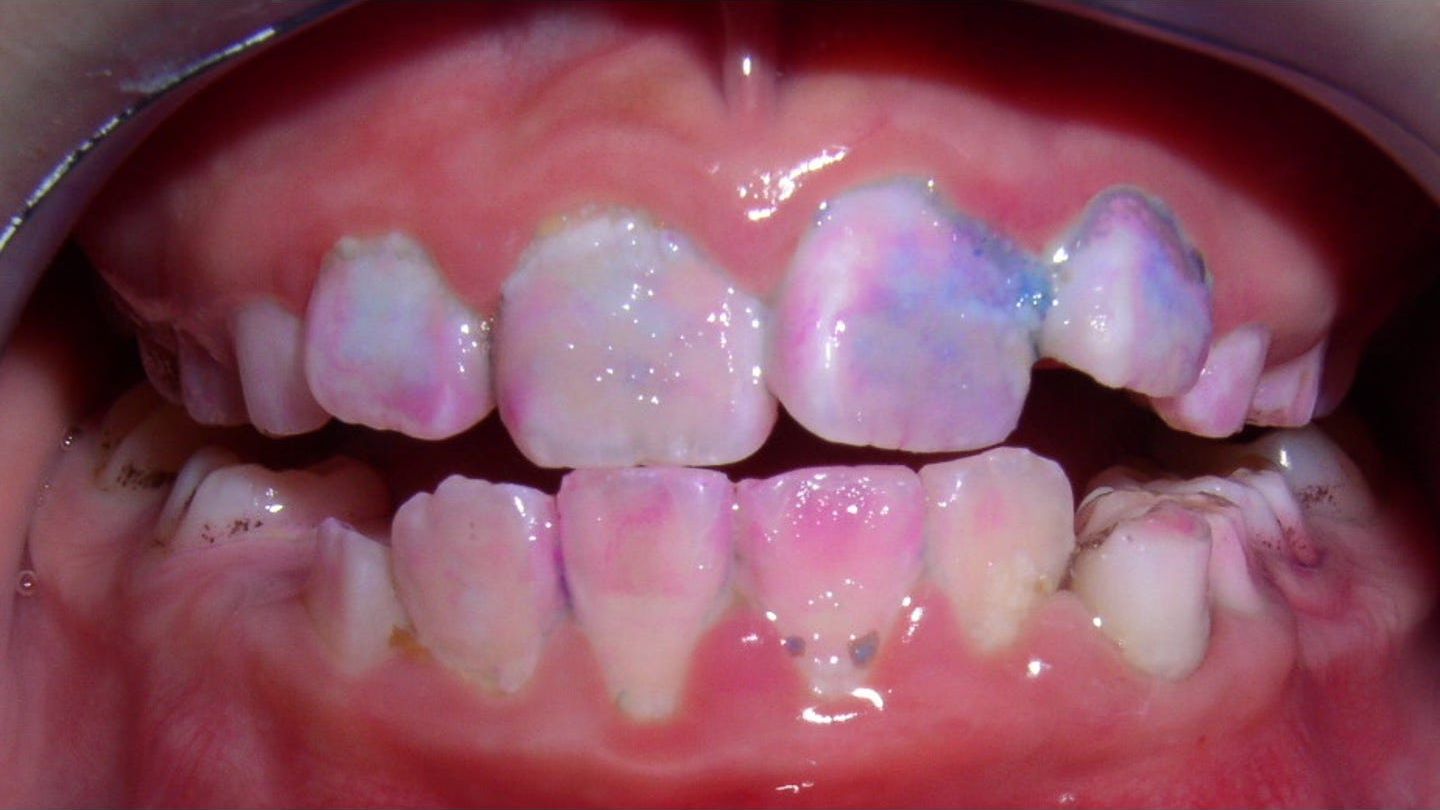
Author: Gum Specialist Dr Reena
Every fifteen minutes, a child in England has a tooth extracted. It is the number one cause of paediatric hospital admissions. The NHS spends over £51 million a year on it. We talk about this constantly - the caries epidemic, the sugar problem, the public health failure. And it is a failure. But while we have been staring so hard at the cavity, we have been systematically missing something else entirely.
Sixty percent of 12-year-olds have gum inflammation. Forty percent of 15-year-olds have gingival bleeding on probing. By age 19, 77% have at least 1mm of attachment loss - a 25-fold increase from age 14, most of it happening in a two-year window between 14 and 16 that passes through the average general practice almost completely unnoticed. The data is not new. The blind spot is ours to fix.
The reasons we miss it are structural. Perio disease in children doesn’t announce itself the way a cavity does. There is no visible hole, no parental complaint, no obvious reason to look. The child presents, we check for caries, we apply fluoride, we talk about sugar. The gums bleed gently on probing and the finding is noted - or not noted - and the appointment ends. What we haven’t done is apply the simplified BPE, document attachment levels in the older teenager, consider whether that bleeding is a normal developmental finding or an early sign of a disease that will compound silently for decades. “If you only look for caries, that’s all you’ll find.” It’s not a clever aphorism. It’s a description of exactly what happens.
Understanding what’s normal in the developing dentition is the essential first step. The gingival margin sits several millimetres coronal to the CEJ in children. The sulcus depth on a fully erupted tooth can be up to 3mm without pathology. In teenagers with a healthy periodontium, the alveolar crest sits between 0.4 and 1.9mm apical to the CEJ. Passive eruption creates transient pseudo-pocketing around partially erupting teeth that bleeds on probing but does not represent disease. These are not reasons to dismiss findings - they are reasons to interpret them carefully. A BPE code of 2 around a partially erupted molar requires OHI, not a referral. A true pocket in a 13-year-old requires radiographs and specialist consideration. The most common mistake is applying adult rules to a developing dentition, and it runs in both directions: over-treating the normal and under-treating the pathological.
The conditions we are most likely to encounter - and most likely to miss - follow a recognisable pattern. Plaque-induced gingivitis peaks at puberty, affects 60% of 12-year-olds, and is fully reversible with biofilm disruption. It is not normal and it should not be dismissed. Puberty gingivitis is an exaggerated response to plaque mediated by sex hormones - resolve the biofilm and it resolves; leave the biofilm and it can transition to periodontitis. Molar-incisor periodontitis - the condition formerly called localised aggressive periodontitis - is the one most likely to be sitting in your practice undiagnosed right now. First molars and incisors with attachment loss disproportionate to biofilm levels. The patient seems to maintain well. The gums look reasonable. The radiographic bone loss is the key sign, and it will not reveal itself unless you take the radiograph. sBPE from age 12 is mandatory before every orthodontic case. It is not optional. It is the minimum.
The risk factor picture in children is rarely a single cause. Suboptimal oral hygiene sits at the centre, compounded by the hormonal turbulence of puberty, the mechanical challenge of orthodontic appliances, crowding, mouth breathing, high-risk snacking habits, and increasingly vaping. A periodontium still in development has less reserve than an adult one. The margin for neglect is smaller than we tend to assume. And yet the oral hygiene statistics, on the surface, look reasonable. Seventy-nine percent of 12-year-olds brush twice daily. That is not a failing population. But 60% of those same children have gum inflammation 0 which tells us that the act of brushing is not the problem. The technique is. The coverage is. We have patients who are doing the routine without doing the work - a quick brush, the front surfaces, two minutes that miss the places the disease actually lives. This is not a compliance problem. It is a guidance problem. We have not been specific enough, early enough, about the how - not just the habit.
The sBPE protocol for under-18s from the BSP and BSPD in 2021 gives us the framework. Under 7: do not use BPE, but unexplained premature tooth loss, gross mobility or suppuration refers immediately. Age 7 to 11: codes 1 and 2 only on six index teeth, avoiding false pocketing around partially erupted teeth. Age 12 to 17: full BPE codes, radiographs for code 3 or 4, and any Stage II or above with Grade C goes directly to specialist referral. This is not a complex protocol. It is a simple, age-stratified framework that everyone should be using.
There is a version of this that plays out in many areas of life. We screen for what we expect to find. We notice what we have been trained to notice. The radiograph gets read for the lesion we suspect, the consultation navigates toward the presenting complaint, the annual review covers the metrics on the dashboard. Meanwhile, the thing we weren’t looking for develops quietly, compounds slowly, and presents five or ten years later as a problem that was always there - just never seen. In medicine, in management, in relationships, the blind spot is rarely a lack of skill. It is a lack of directed attention. You have to decide to look. The gums of your youngest patients are waiting!
